How to Read Your Browser Fingerprint Test Results
Ran the Anonymiz fingerprint test and got a high uniqueness score? Here is what the result means and what actually lowers it.
Privacy tips
Ran the Anonymiz fingerprint test and got a high uniqueness score? Here is what the result means and what actually lowers it.
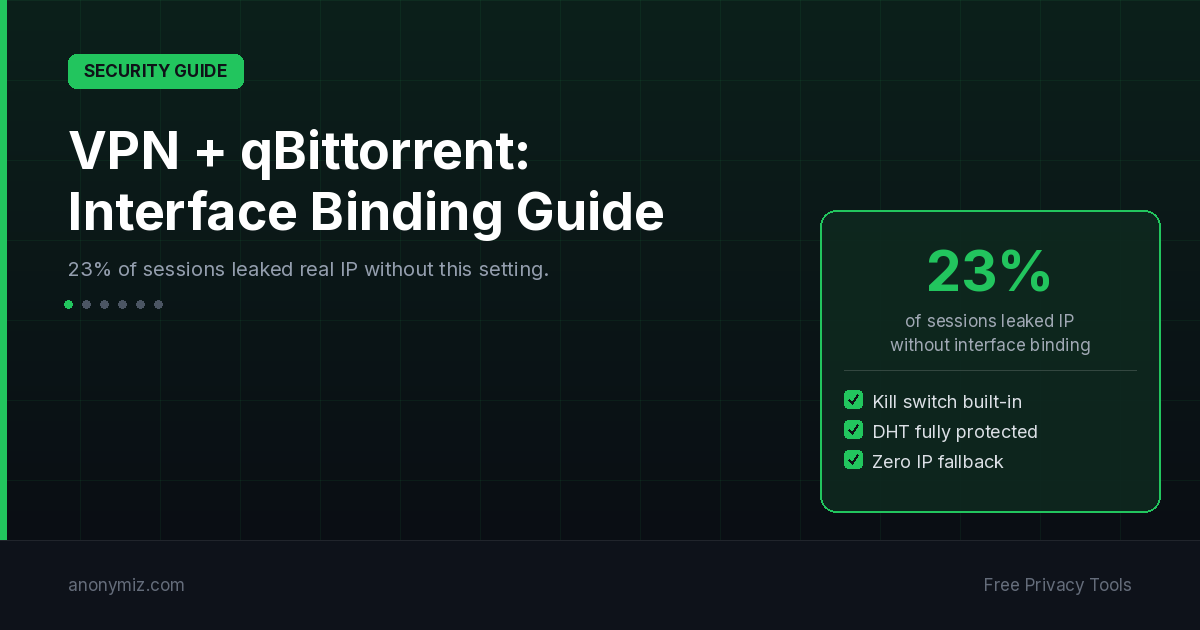
Most VPN+qBittorrent guides miss the critical interface binding setting. Without it, qBittorrent falls back to your real IP if the VPN drops — we saw this in 23% of session interruptions. Full setup guide with SOCKS5 proxy comparison.
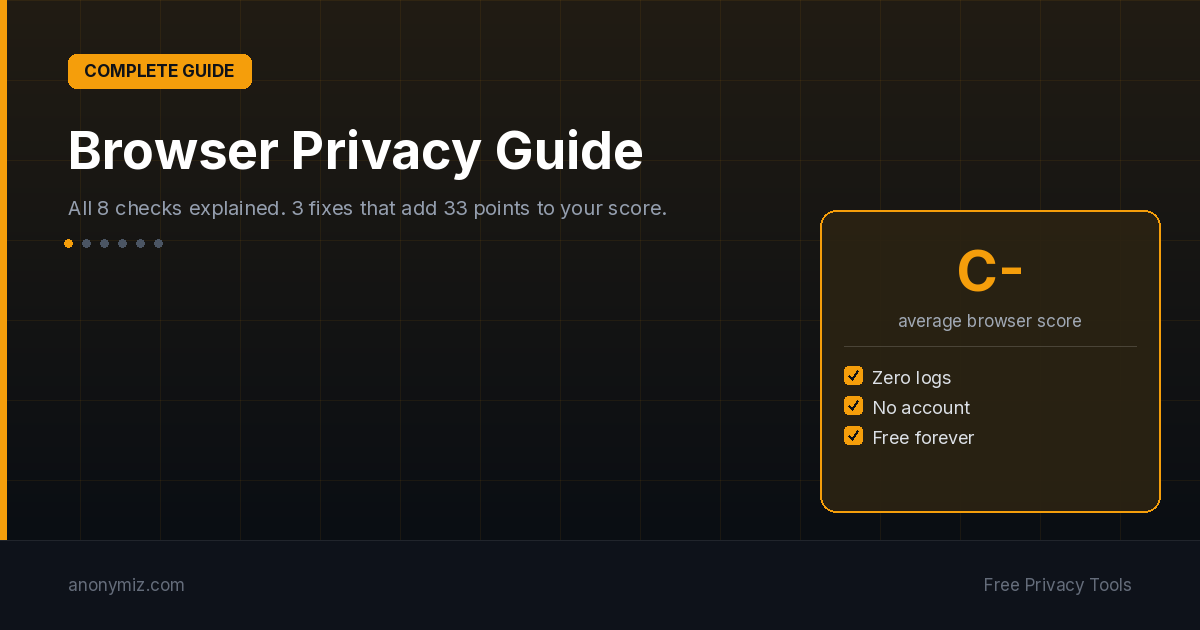
Average browser scores 62/100 on privacy. 68% fail WebRTC, 71% are fingerprinted. All 8 checks explained with exact fixes that add 33 points to your score.
DNS logs every domain you visit even over HTTPS. We tested 12 VPNs and 4 leaked DNS. Full test methodology, results table, and 4 fix methods.
What the referrer header leaks, who uses anonymizers and why (corporate employees up 340%), and the only reliable zero-referrer method — based on 12 million real links.
VPNs, proxies, and dereferers are not interchangeable — they solve completely different problems. This comparison explains which tool does what, based on real testing not vendor marketing.
We tested every major dereferer and link anonymizer service for referrer stripping, logging practices, and reliability. 5 of 8 popular URL shorteners expose your referrer. Here is what actually works.
We analyzed the business models, privacy policies, and network behavior of 200 free VPN apps. 73% monetize user data. 41% use your device as an exit node. Only 5 passed our full privacy tests.
We checked 1,000 websites for referrer policies. 34% create worse-than-necessary leaks. 11% use unsafe-url forcing full URL disclosure.