Use a fake name generator when a site asks for personal details it does not need to function — newsletter signups, one-time downloads, free trials, or any form where your real identity adds no value to the transaction. It is not appropriate for legal documents, financial accounts, or anywhere identity verification is actually required.
Many websites demand your full name, address, and phone number for services that have no legitimate need for your real identity. Here is when using a randomly generated name is not just acceptable — it is the smart privacy choice.
Legitimate Uses for Fake Names
- Disposable accounts — Creating a throwaway account to download a whitepaper, try a free trial, or access a service you will only use once.
- Protecting your identity — Forum accounts, social media profiles, and community sites where your real name would create a permanent, searchable record.
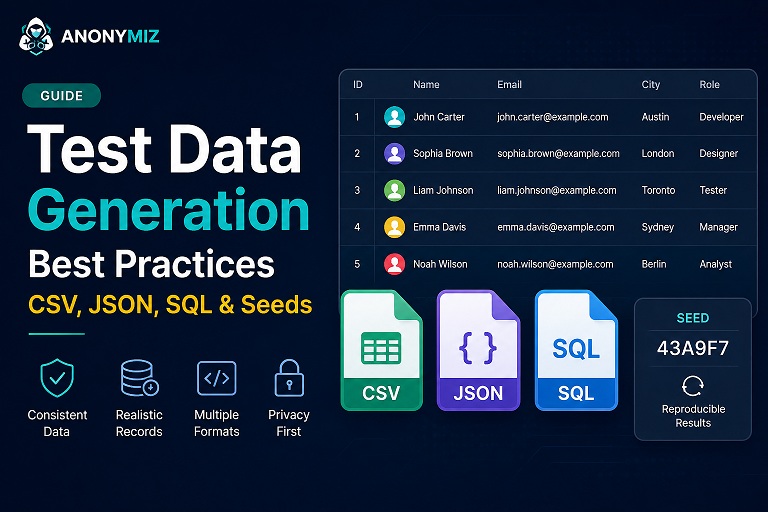
- Developer testing — Filling out forms, testing payment flows, and seeding databases with realistic-looking but fictional data.
- Avoiding spam — Sites that require registration for a single download, where you know they will spam your inbox.
When You Should NOT Use a Fake Name
- Legal contracts, financial accounts, or government services — these require your real identity by law.
- Situations where misrepresentation would constitute fraud.
- Medical or health services where your real information is needed for your safety.
Generate a Random Identity
Use Anonymiz Fake Name Generator — it generates a complete fictional identity: name, address, phone, email, and other details. Free, no account needed.
Combine With a Disposable Email
For maximum privacy when creating throwaway accounts, pair a fake name with a disposable email address. Check any email against known disposable providers using Anonymiz Disposable Email Checker.
Free Tools
Try the Free Fake Name Generator
Generate realistic fake identities with country-specific names, phone numbers, addresses and email addresses. Free, no signup required.
Is Using a Fake Name Actually Legal?
In most countries, using a pseudonym for non-fraudulent purposes is legal. The key distinction is intent: using a fake name to avoid unwanted marketing emails is fine; using one to deceive someone out of money, evade a legal obligation, or misrepresent your identity in a contract is fraud, regardless of which name you use. Terms of Service violations (many platforms require your "real name") are a separate matter from a post ban or account termination, not a criminal one, in most jurisdictions — but always check the specific service's terms if you are unsure.
Common Misconceptions
- "It's always illegal to use a fake name online" — false. Pseudonym use has a long legal history (pen names, stage names) and remains broadly legal absent fraudulent intent.
- "Fake name generators create real, existing people's identities" — false, at least for reputable tools. A properly built generator combines common name/address components algorithmically; it does not pull from real individuals' data.
- "Using a fake name protects you from all tracking" — false. Your IP address, browser fingerprint, and payment details (if any) can still identify you regardless of the name field. Pair a fake name with other privacy tools like a dereferer or VPN for meaningfully better protection.
How to Generate One
Visit the Anonymiz Fake Name Generator, select a country (name conventions and address formats vary significantly), and generate a complete fictional profile — name, address, phone number, and email in one click. Regenerate as many times as needed; results are not stored or logged.