How to Check HTTP Headers of Any Website
What HTTP headers are, what the most important ones reveal about a server, and how to inspect response headers of any website free.
How-to guides
What HTTP headers are, what the most important ones reveal about a server, and how to inspect response headers of any website free.
How to tell if a website is down for everyone or just you, the most common causes, and how to check any site status free in seconds.
How anonymous links work — HTTP redirects, client-side techniques, Referrer-Policy headers — what they protect against, their limits, and how to create anonymous links free.
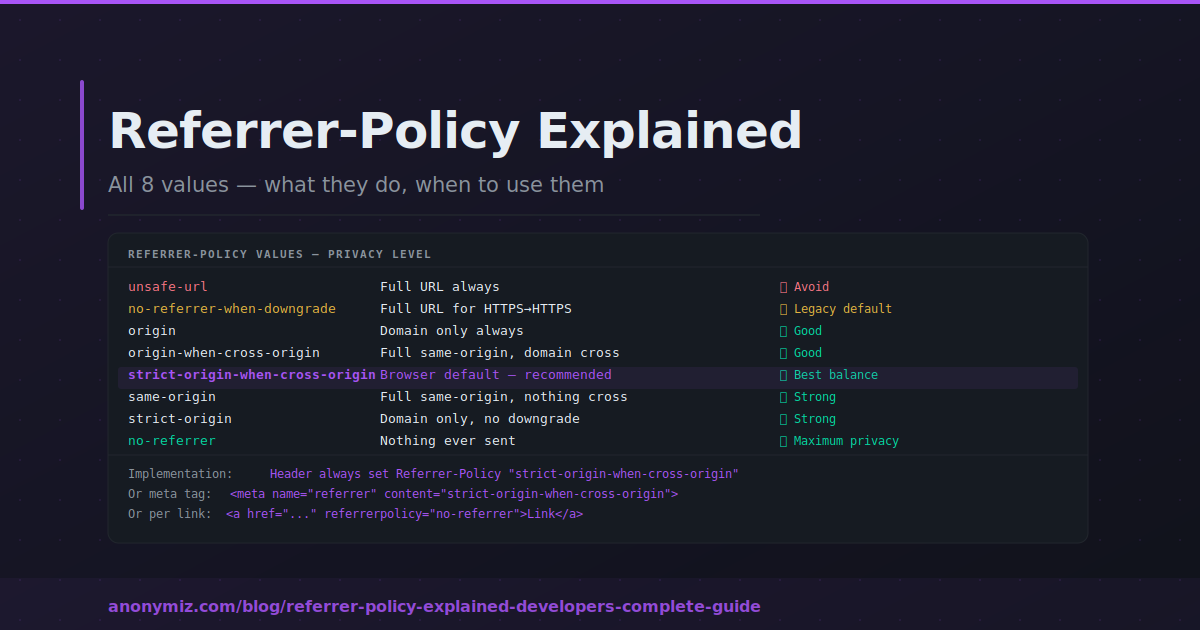
Every Referrer-Policy value explained — what each does, when to use it, how to implement in Apache, Nginx and PHP, and which policy suits your site type.

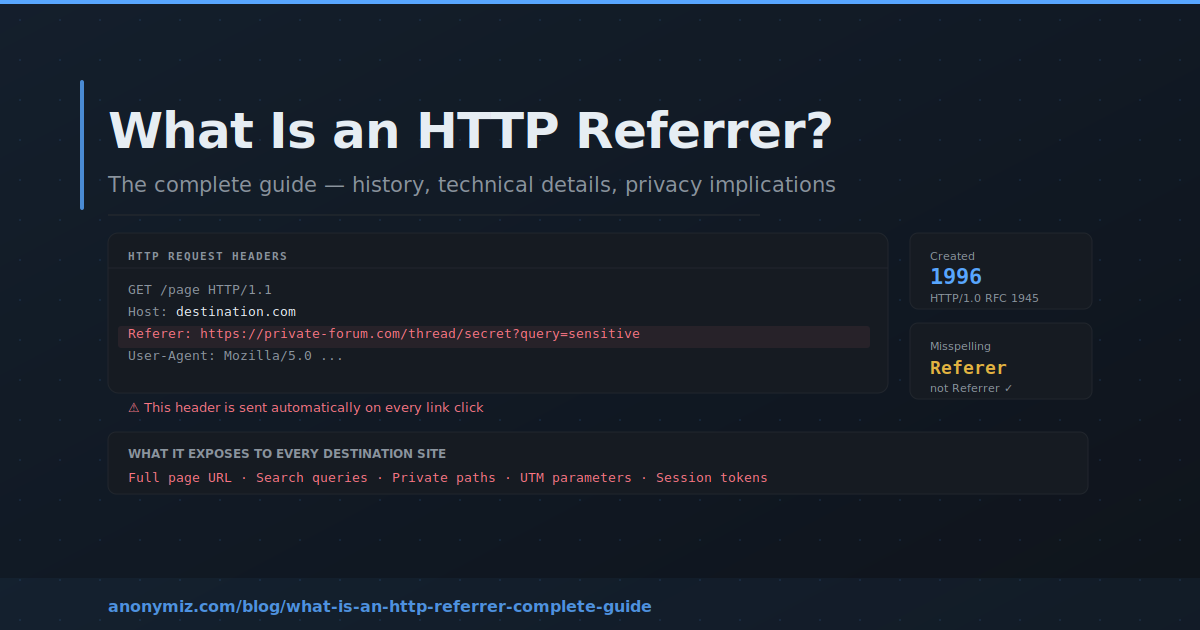
The complete guide to the HTTP Referer header — what it is, how it works, what it exposes, who reads it, legal implications under GDPR, and how to control it.
DNS records control where your domain sends traffic — for websites, email, verification and more. Here is how to check A, MX, TXT, CNAME and NS records instantly.
Finding all subdomains of a domain is a critical step in security auditing, competitive research and infrastructure mapping. Here is how it works and the fastest free method.
Need HTTPS for localhost or an internal service? Here is how to generate a self-signed SSL certificate in seconds — online, with OpenSSL or with mkcert for local development.
HTTP security headers are the fastest way to significantly improve your website's security posture. Here is what each header does, what grade it affects and how to implement them.