
AI-generated websites have become indistinguishable from human-built ones at first glance. The templates are polished, the copy is plausible and the layouts are professional. But on closer inspection, certain patterns consistently give them away — and knowing what to look for can save you from trusting a low-quality auto-generated site that exists purely to capture ad revenue or affiliate clicks.
Why It Matters
AI website builders and content farms have industrialised the production of low-quality websites at scale. A single operator can now spin up hundreds of sites, each with thousands of AI-generated pages targeting long-tail search terms. These sites often rank well initially, pass visual inspection and appear credible — until you look more carefully.
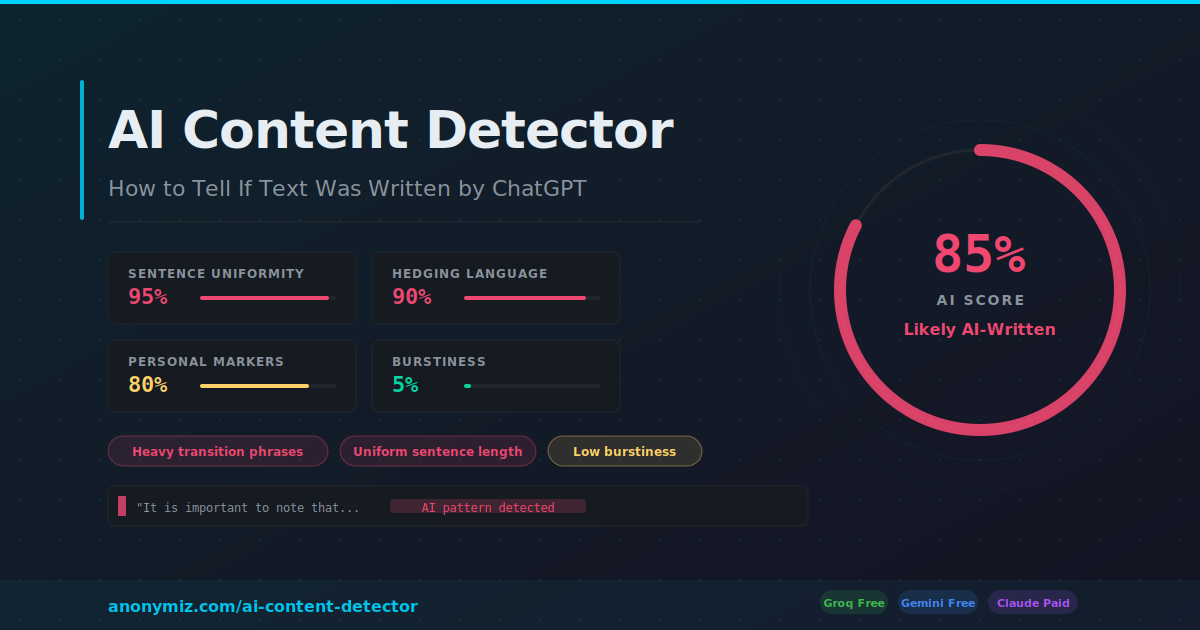
Our free AI Website Detector automates many of these checks. But understanding the underlying signals helps you evaluate any site quickly.
5 Signs a Website Was Built by AI
1. Generic, Template-Perfect Design
AI-built sites typically use popular templates with minimal customisation. Everything looks correct but nothing looks considered — the same blue primary button, the same three-column feature layout, the same stock photo of a person at a laptop. There is no design personality, no quirks, no evidence that a human made deliberate choices. Real websites have a visual identity that evolved over time with real decisions behind it.
2. Content That Answers Without Knowing
AI content has a characteristic structure: state the question, provide a balanced answer with qualifiers ("it depends", "there are several factors"), list pros and cons with equal weight, conclude by restating the question. It answers correctly but without the specificity that comes from actual experience. Real expert content takes positions, gives specific numbers and says "use method A in situation X but method B when Y". AI content hedges everything.
3. Missing or Implausible About Pages
AI-generated sites frequently have no About page, or one so generic it could apply to any company in any industry. When there are team members, they often have stock photos with names that do not appear anywhere else on the internet. Check the About page carefully — real companies have real people, real histories and real contact details that match their stated location and industry.
4. New Domain with Massive Content Volume
A domain registered six months ago with 500 articles, all published within a few weeks, is a strong signal. AI content farms launch with a large content dump to establish topical authority quickly. Check the domain age via WHOIS lookup and compare it to the volume and date range of published content.
5. Identical Article Structure Across Topics
Pick three articles on the same site and compare their structure. AI-generated content from the same template will have near-identical heading hierarchies, similar paragraph counts, the same approximate word counts and the same general formula. Human-written content varies significantly based on what the topic actually requires.
Technical Signals to Check
Beyond visual inspection, our AI Website Detector checks for technical signals: which CMS or website builder was used, the presence of AI writing tool meta tags, schema markup patterns common to automated sites, content freshness signals from sitemaps and the ratio of unique to templated content across pages. Run any URL through it for an instant breakdown.
What to Do With This Information
Identifying an AI-built site does not mean everything on it is wrong. It does mean you should apply extra scrutiny — verify specific claims against primary sources, check whether stated authors have verifiable credentials and look for whether the advice is genuinely specific or formulaically generic. For anything that matters, stick to sources with verifiable human expertise behind them.