Subdomains reveal the structure and infrastructure of any web property. Finding them is a core skill in security research, competitive intelligence, and infrastructure auditing. This guide explains what subdomains are, why enumerating them matters, how subdomain discovery techniques work, and how to find all subdomains of any domain free.
What Are Subdomains?
A subdomain is a prefix added to a domain name — www.example.com, mail.example.com, api.example.com, staging.example.com, and admin.example.com are all subdomains of example.com. Each subdomain can point to a different server, serve different content, and have different security configurations. Large organisations may have hundreds of subdomains across their web infrastructure.
Why Subdomain Discovery Matters
Security research and bug bounty
Subdomain enumeration is typically one of the first steps in security assessments. Forgotten or poorly maintained subdomains — staging environments with test credentials, old admin panels, decommissioned services — are common attack surfaces. Many significant security vulnerabilities have been found on subdomains that companies forgot they owned. Bug bounty programs specifically reward researchers who find vulnerable subdomains.
Subdomain takeover
When a service is decommissioned but its DNS record remains pointing to the old provider, an attacker can register on that provider and claim the subdomain. This is called subdomain takeover — the attacker serves content under the organisation's domain, enabling phishing, cookie theft, and trust exploitation. Subdomain enumeration combined with availability checking identifies these vulnerabilities.
Infrastructure mapping
Understanding the full subdomain landscape of a domain reveals its technical infrastructure: which cloud providers it uses, which services it runs, how its staging and production environments are structured, and where its administrative interfaces are. This is valuable for competitive intelligence and for organisations auditing their own attack surface.
How Subdomain Discovery Works
There are several techniques for discovering subdomains. DNS brute force tries thousands of common subdomain names — www, mail, api, admin, staging, dev, test, blog, shop — and checks which ones resolve. This finds most common subdomains. Certificate transparency logs are public records of all SSL certificates ever issued. Because certificates include domain names and SANs (Subject Alternative Names), searching these logs reveals subdomains that have had certificates issued for them. Search engine dorking queries search engines for known subdomains of a domain using search operators. DNS zone transfer (AXFR) — when misconfigured, a DNS server may reveal all its records to any requester. This is the most comprehensive but only works on misconfigured servers.
How to Find All Subdomains Free
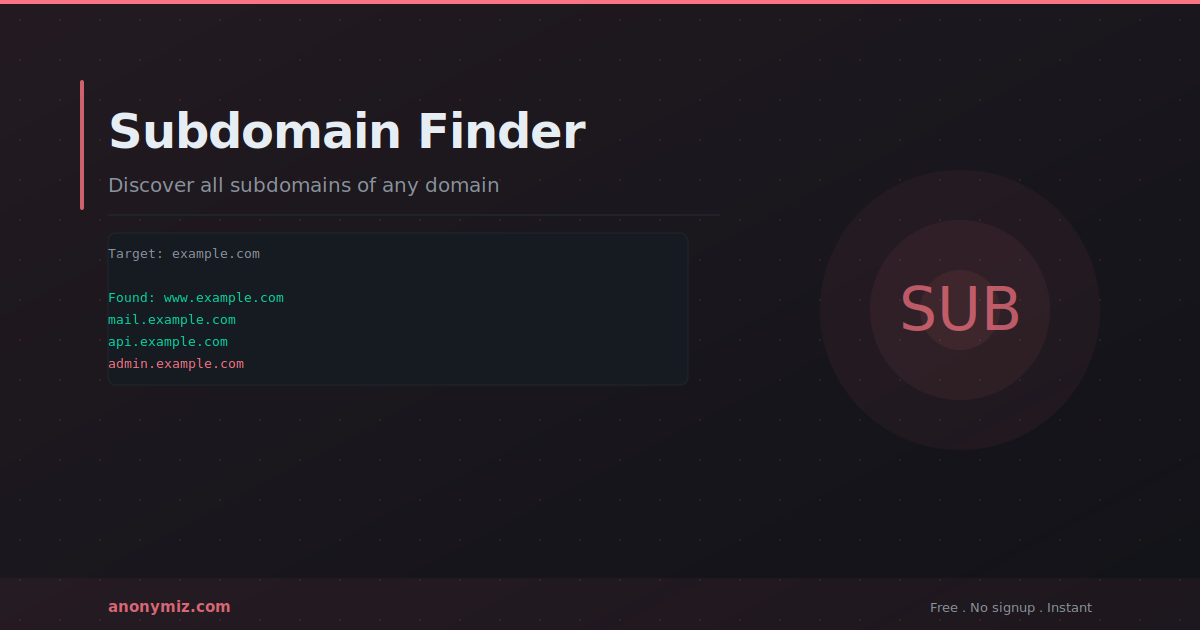
The Anonymiz Subdomain Finder combines multiple discovery techniques to enumerate subdomains of any domain. Enter any domain and see all discovered subdomains with their resolution status. No account required. Useful for security researchers, developers auditing their own infrastructure, and competitive analysis.
Frequently Asked Questions
Is subdomain enumeration legal?
Subdomain enumeration of domains you own or have permission to test is entirely legal. Enumerating subdomains of third-party domains without permission may violate terms of service or computer fraud laws in some jurisdictions — even though it only uses public information. Bug bounty programs explicitly authorise enumeration within their scope.
Can organisations hide their subdomains?
Partially. Using wildcard DNS records, not issuing certificates for sensitive subdomains, and using private DNS for internal services all reduce discoverability. However, certificate transparency logs make it very difficult to completely hide subdomains that have public SSL certificates.